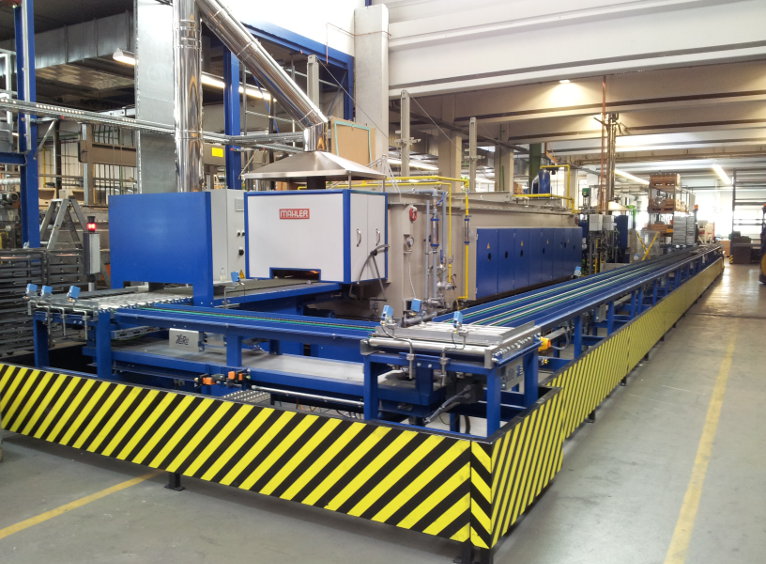
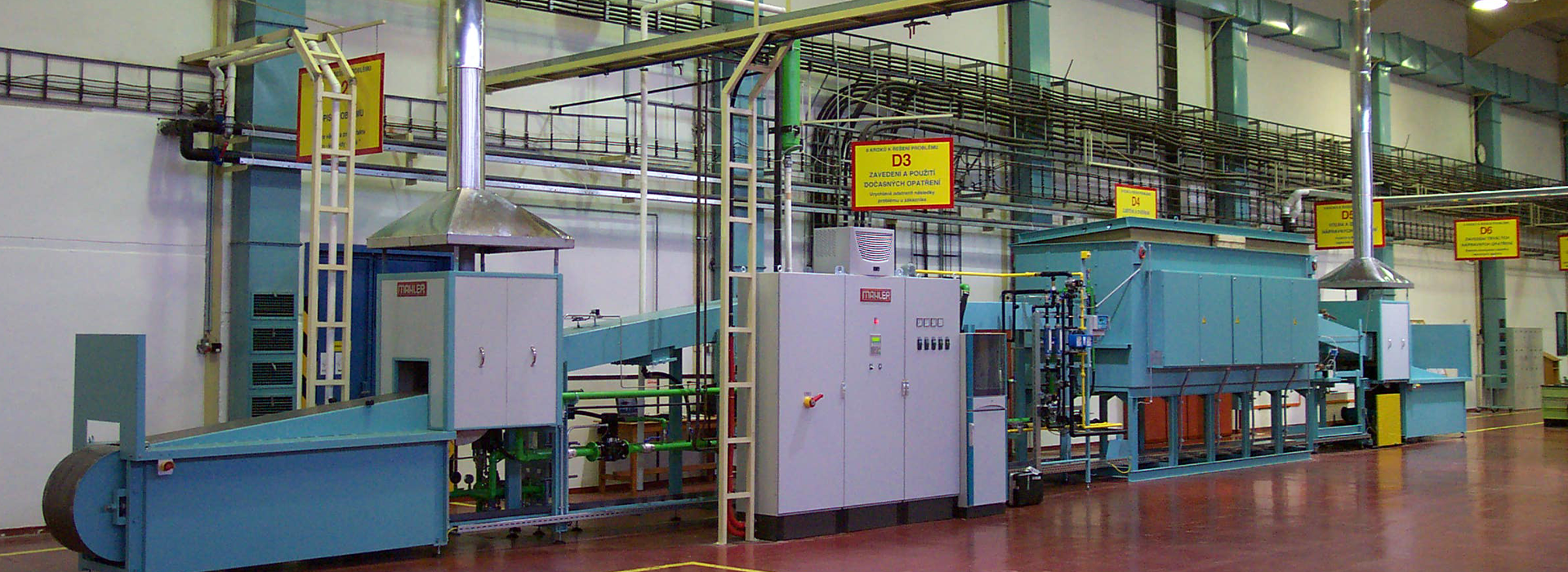


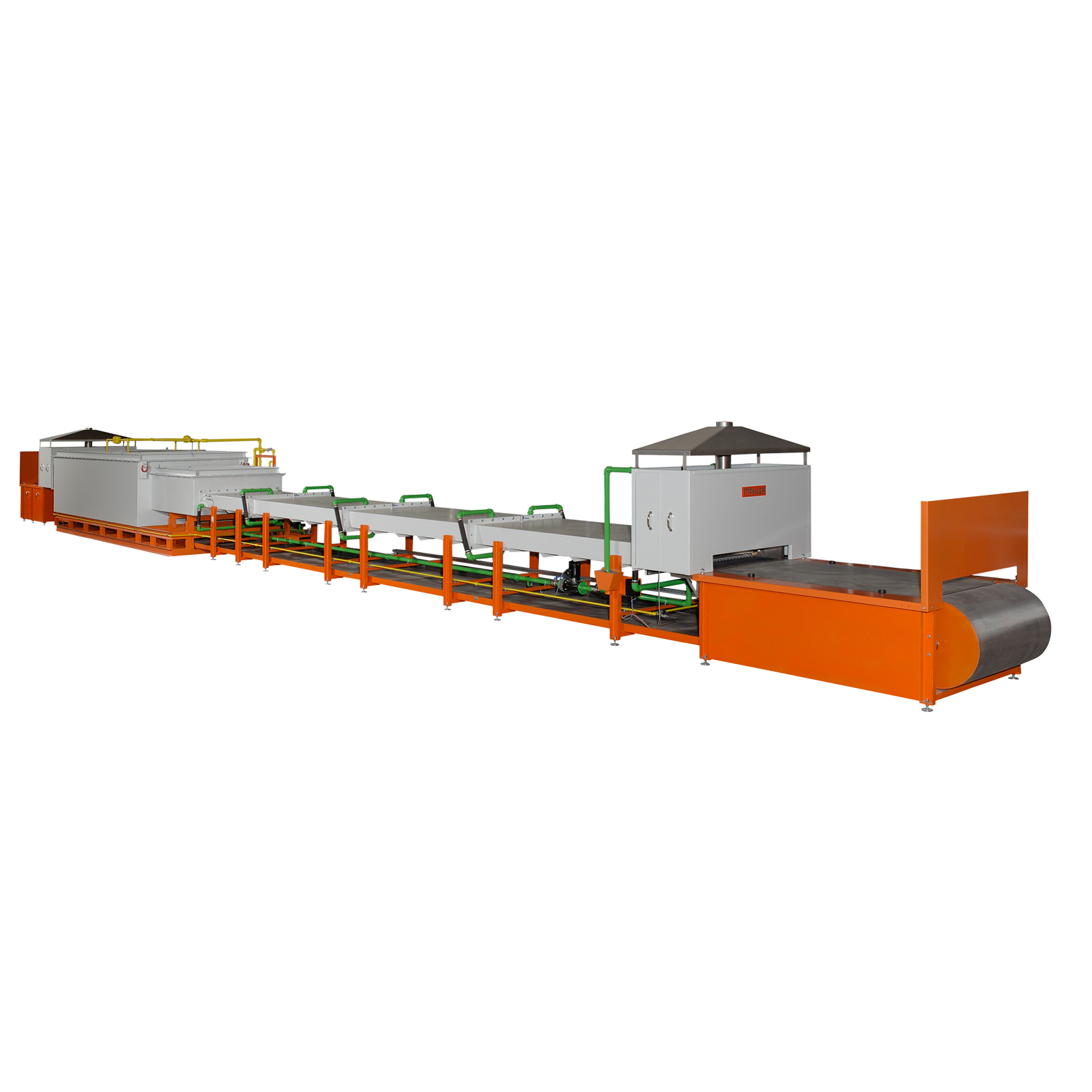

Exogas Generators by MAHLER
Efficient Protective Gas Supply – Integrated or External, Perfectly Matched to Industrial Heat Treatment
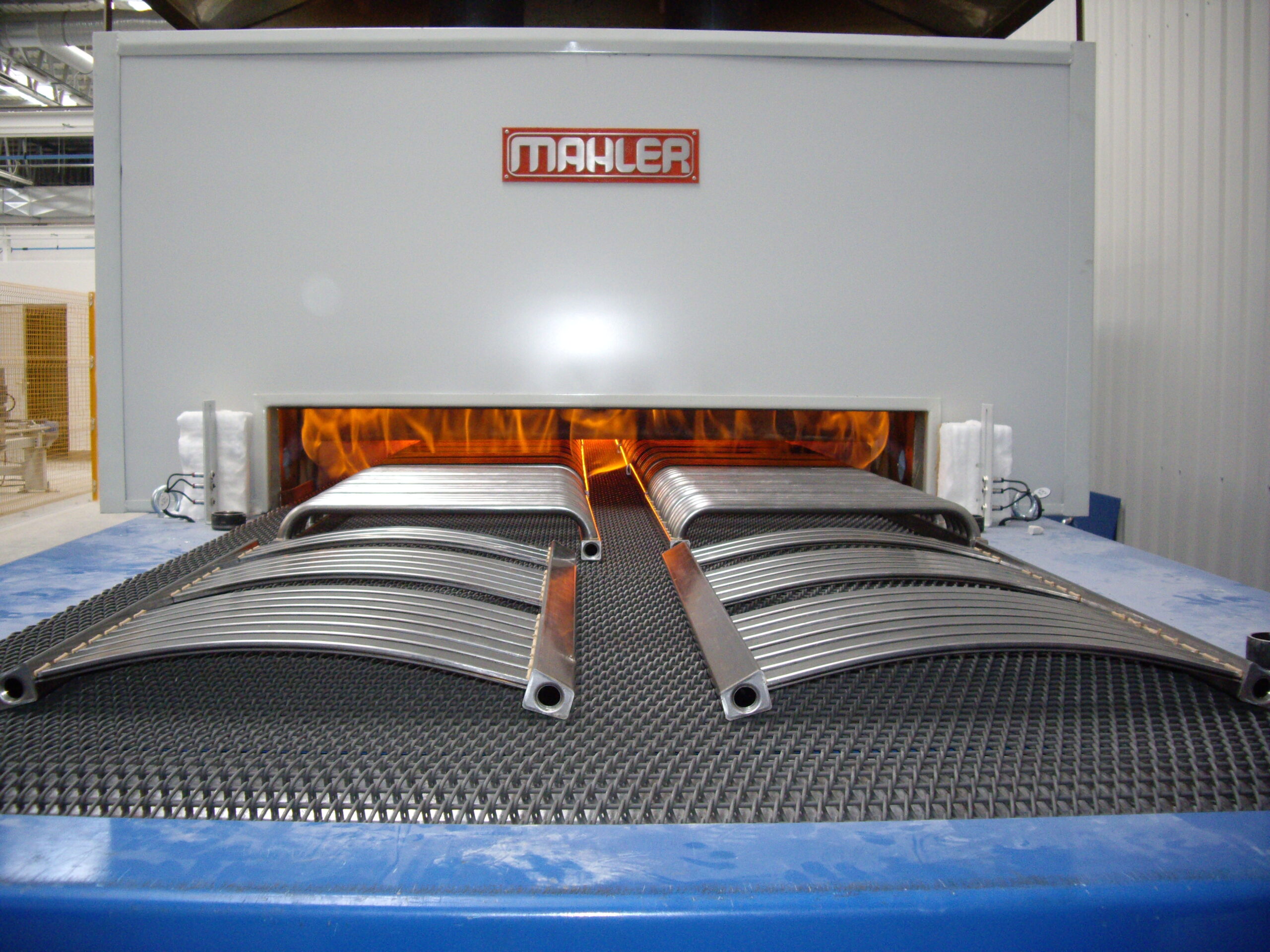
For decades, MAHLER has been developing industrial continuous furnaces that are valued worldwide for their reliability, energy efficiency, and process stability. A key component of this performance is the generation of exothermic protective gases (Exogas), either integrated directly into the furnace or supplied via an external, modular generator system.
Our Exogas systems provide a stable, economical, and process-reliable atmosphere for brazing, annealing, and heat treatment of steel components.
What Is Exogas?
Exogas is an exothermically generated protective gas produced through the catalytic conversion of a precisely controlled fuel gas-air mixture. It provides a cost-effective, robust, and process-stable atmosphere for the heat treatment of steel.
Integrated Exogas Generators – Built Directly into the Furnace
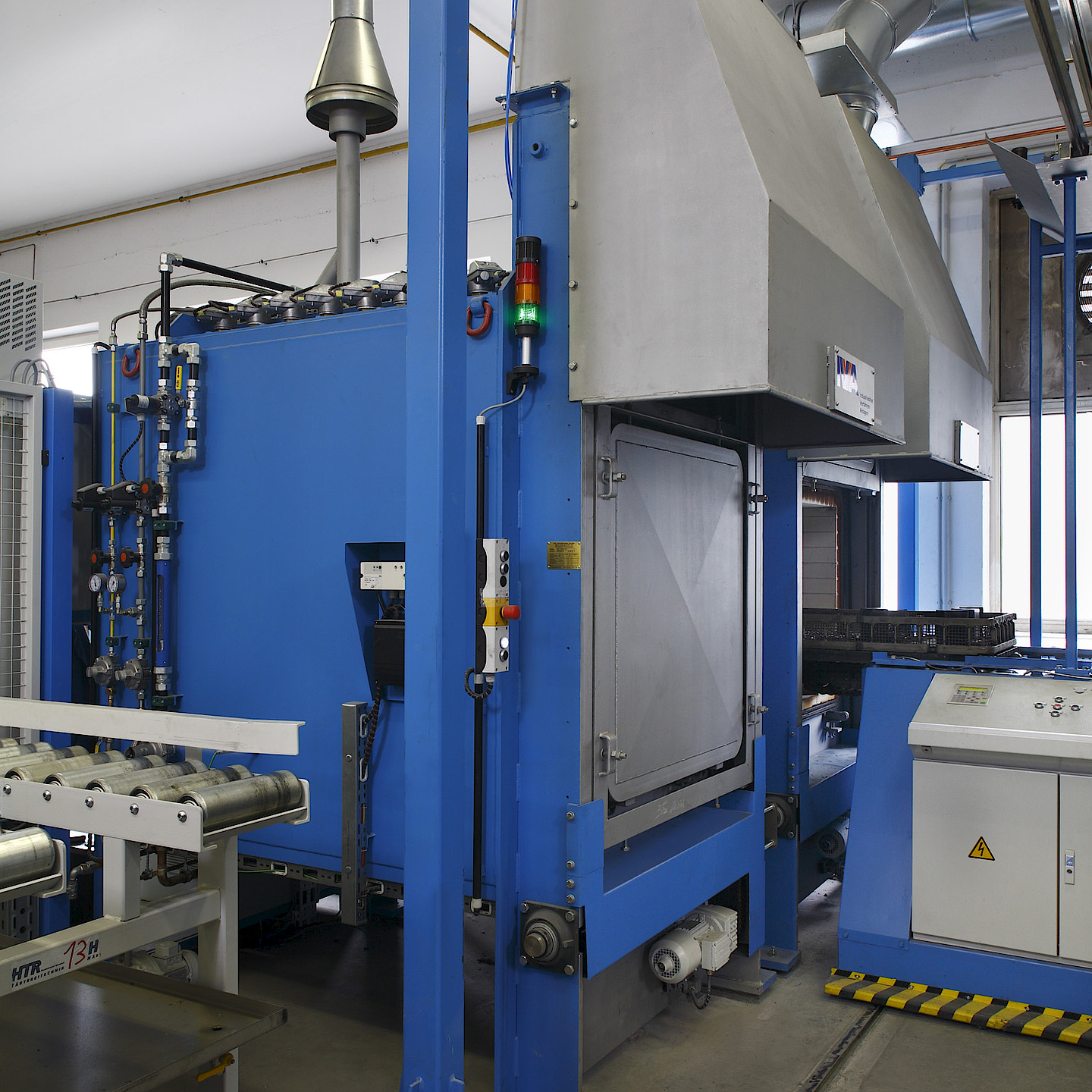
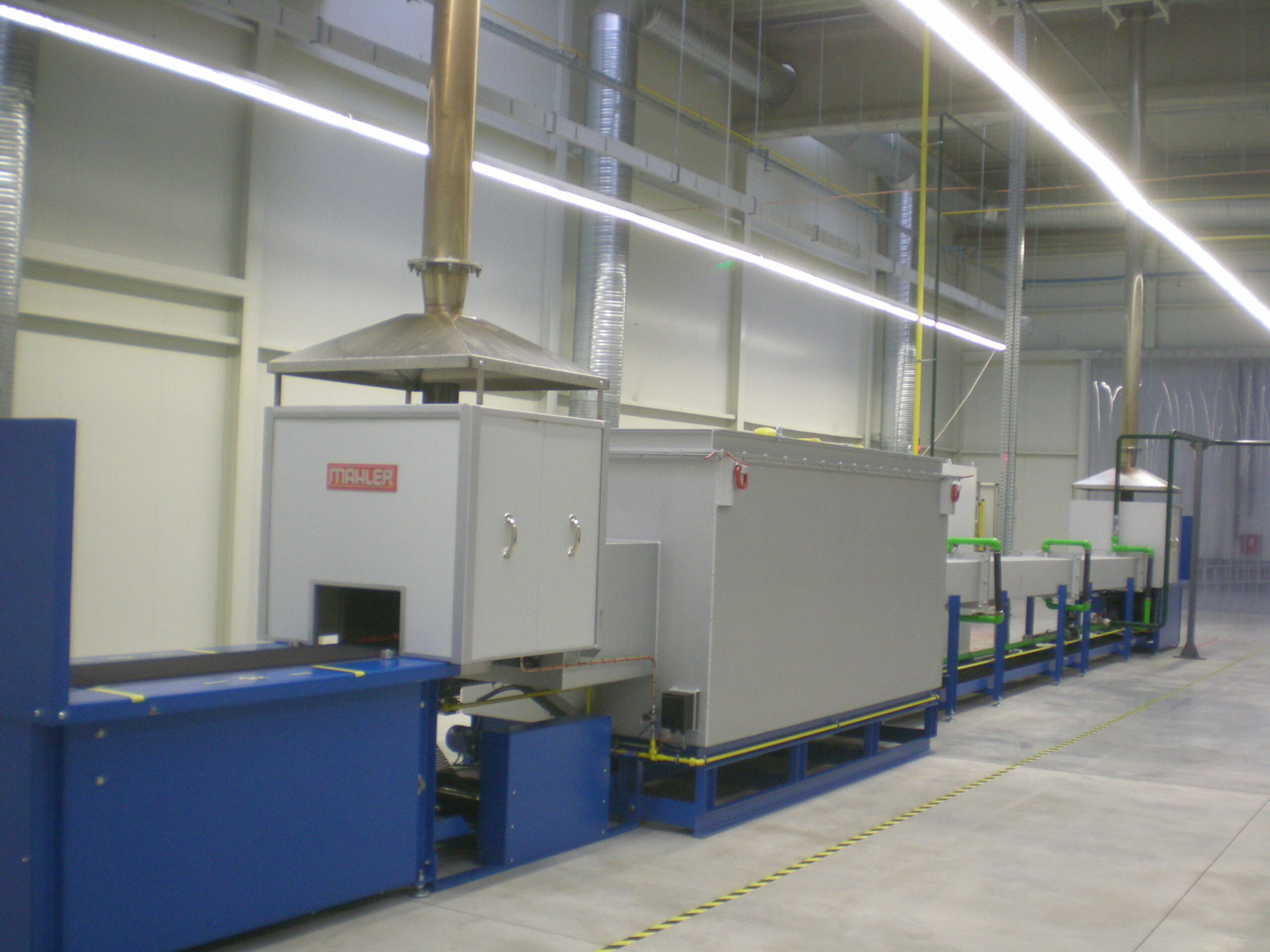
For maximum compactness and ease of operation, MAHLER offers integrated Exogas generators that are fully incorporated into the furnace design. They are ideal for customers seeking a space-saving, low-maintenance, and ready-to-operate solution.
This configuration forms a complete Exogas system that:
- Precisely controls the gas-air ratio
- Generates Exogas using catalyst-filled retorts
- Provides comprehensive safety monitoring
- Communicates directly with the furnace control system
External Exogas Generators – Modular, Scalable, Flexible
For larger production lines, multiple furnaces, or specialized process requirements, MAHLER also offers external Exogas generators.
Based on the same proven technology as the integrated systems, these generators deliver higher capacities, can be expanded modularly, and may be installed independently of the furnace location. In addition, furnaces supplied by an external Exogas generator can continue operating during maintenance or, if required, repair work on the generator, either with an alternative protective or reaction gas atmosphere or, where applicable, under air atmosphere.
Fuel Gases for Exogas Generation
Exogas can be produced from various industrially available fuel gases. The key requirement is a stable composition suitable for catalytic conversion.
In Summary
Exogas can be generated from all combustible gases that contain a suitable ratio of hydrogen and hydrocarbons. In practice, three fuel gases have become industry standards:
- Natural Gas – The industrial standard, economical and available worldwide
- Propane (LPG) – Ideal for locations without access to a natural gas supply
- Butane or Propane/Butane Mixtures – A regional alternative with high energy density
This flexibility allows MAHLER to adapt Exogas generator systems to each customer's available energy infrastructure.
Technical Features
- Precise gas-air ratio control
- Catalytic CrNi stainless steel retorts
- Comprehensive safety equipment and monitoring
- Seamless integration into modern industrial control systems
- Automatic ignition and monitoring via ionization control
Cost Efficiency & Sustainability
Exogas is one of the most cost-effective protective gas solutions for steel heat treatment processes.
MAHLER generators are engineered to minimize gas consumption while maintaining a constant and highly reproducible atmosphere.
Optional Atmospheres: N₂/H₂ Mixed Gas
As a complement to Exogas generation, MAHLER optionally offers a fully integrated gas mixing panel, providing maximum process flexibility and a secure gas supply.
If the hydrogen content in the mixed gas is reliably maintained below 5%, and the 5% H₂ threshold cannot be exceeded under any operating condition, a separate gas mixing panel is generally not required.
Technical Details
Cost Efficiency & Sustainability
Exogas is one of the most cost-effective protective gas solutions for steel heat treatment processes.
MAHLER generators are engineered to minimize gas consumption while maintaining a stable and highly reproducible furnace atmosphere.
Optional Atmospheres: N₂/H₂ Mixed Gas
As a complement to Exogas generation, MAHLER optionally offers a fully integrated gas mixing panel, providing maximum process flexibility and a reliable gas supply.
If the hydrogen content of the mixed gas is reliably maintained below 5%, and the 5% H₂ threshold cannot be exceeded under any operating condition, a separate gas mixing panel is generally not required.
INQUIRY
We would be pleased to provide you with a customized quotation tailored to your specific requirements.
You can reach us by phone, conveniently via email, or by using our contact form.